It’s been over 20 years since Roman Ondak brought his inter-disciplinary, interactive works to Prague.
The Slovak artist has garnered global critical acclaim since his project his LOOP at the Czech and Slovak Pavilion of the 2009 Venice Biennale. Since then, he has developed a distinctive body of work rooted in the legacy of 1960s and 1970s conceptualism. His approach is characterized by the use of everyday objects and situations, reframing the mundane to make poetic and profound observations on reality. In his artistic practice, the ordinary becomes extraordinary, revealing hidden tensions and oscillations between opposites.
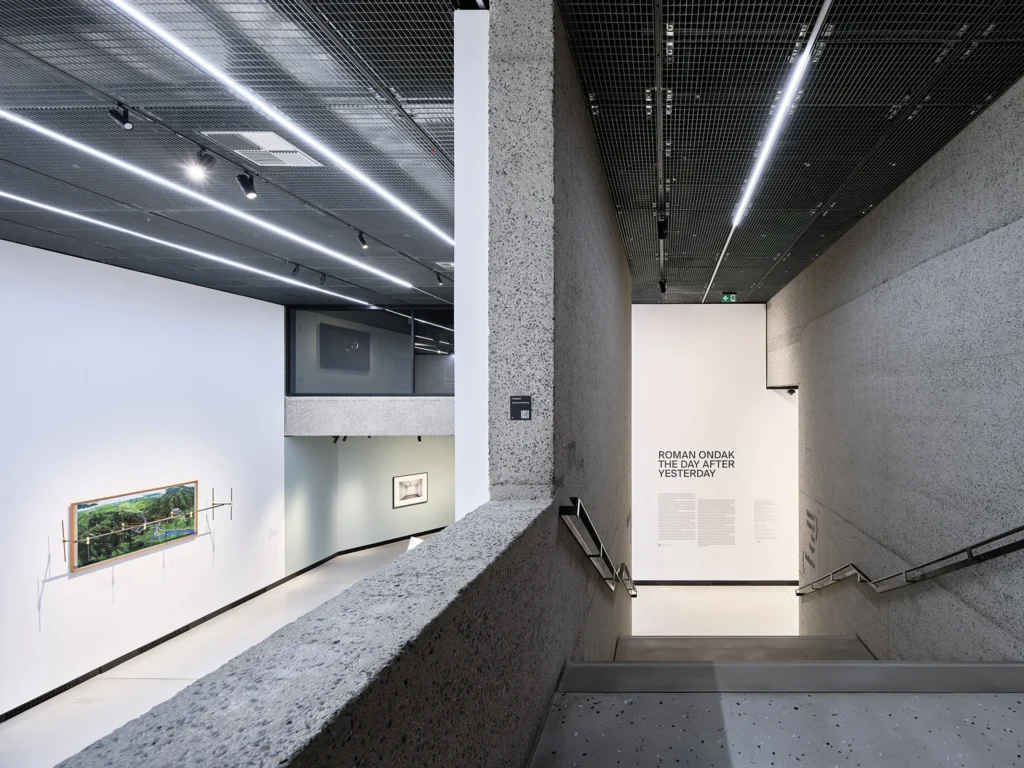
The Kunsthalle Praha plays host to the large-scale exhibition The Day After Yesterday – a wide range of almost 50 works. Across installations, performances, videos, photographs, drawings, and objects, the exhibition highlights his recurring themes of memory, time, and identity.
This exhibition marks something of a fractured homecoming. Roman grew up in the now split Czechoslovakia but is now technically Slovakian national. He describes the world he came into as a “constant fiction”. Propaganda was rife and arbitrary political lines were drawn and redrawn by the day. This had a huge effect on his grasp of reality, loosening it for the better and imbibing in Roman an ability to manipulate perspectives. We see this throughout his works as well as the structure of the exhibition itself: he eschews words like “chronology” and “retrospective” and purposely presents these decades-spanning pieces in no particular order. Time is presented as a matter of perspective; space is filled with subjective chaos.
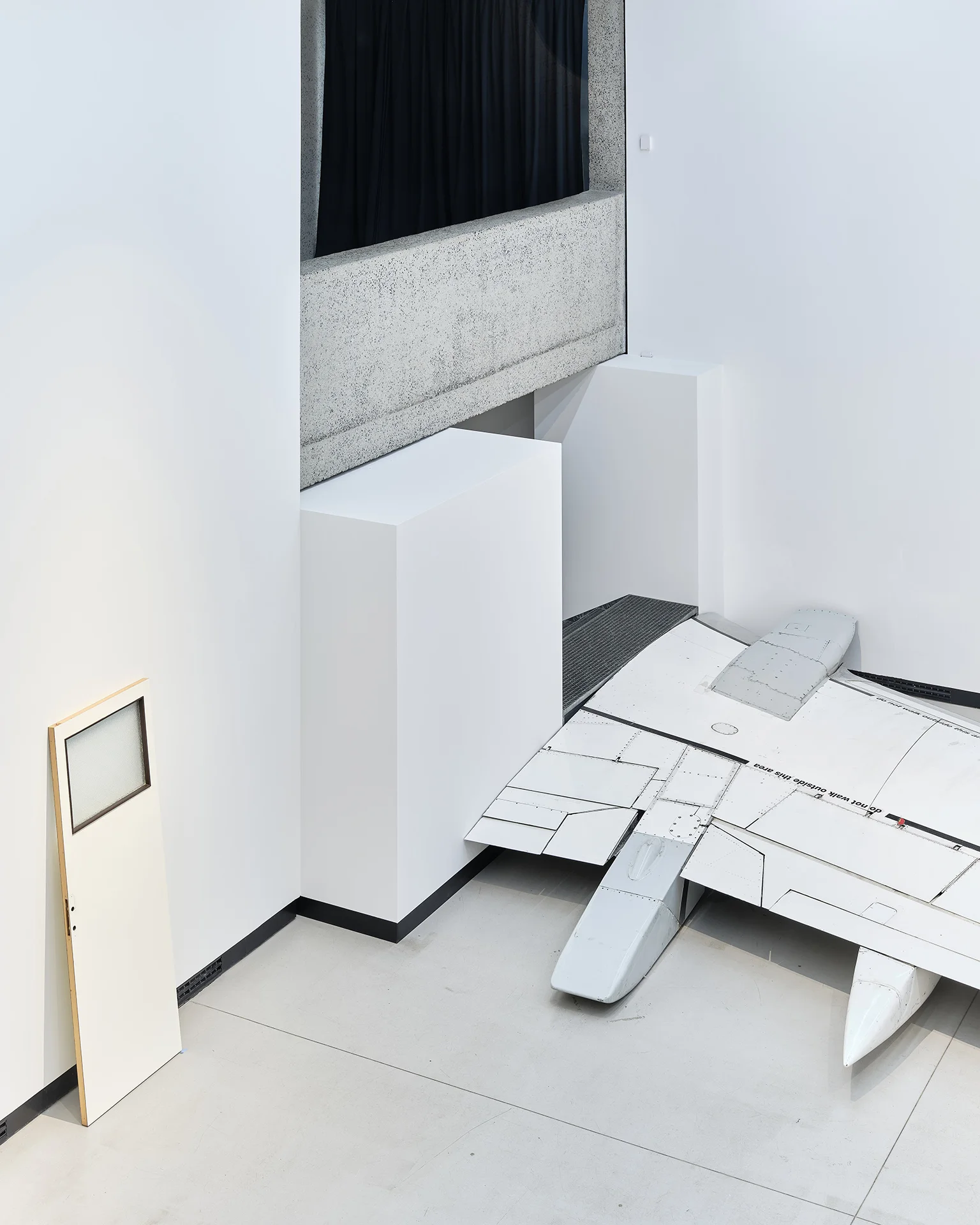
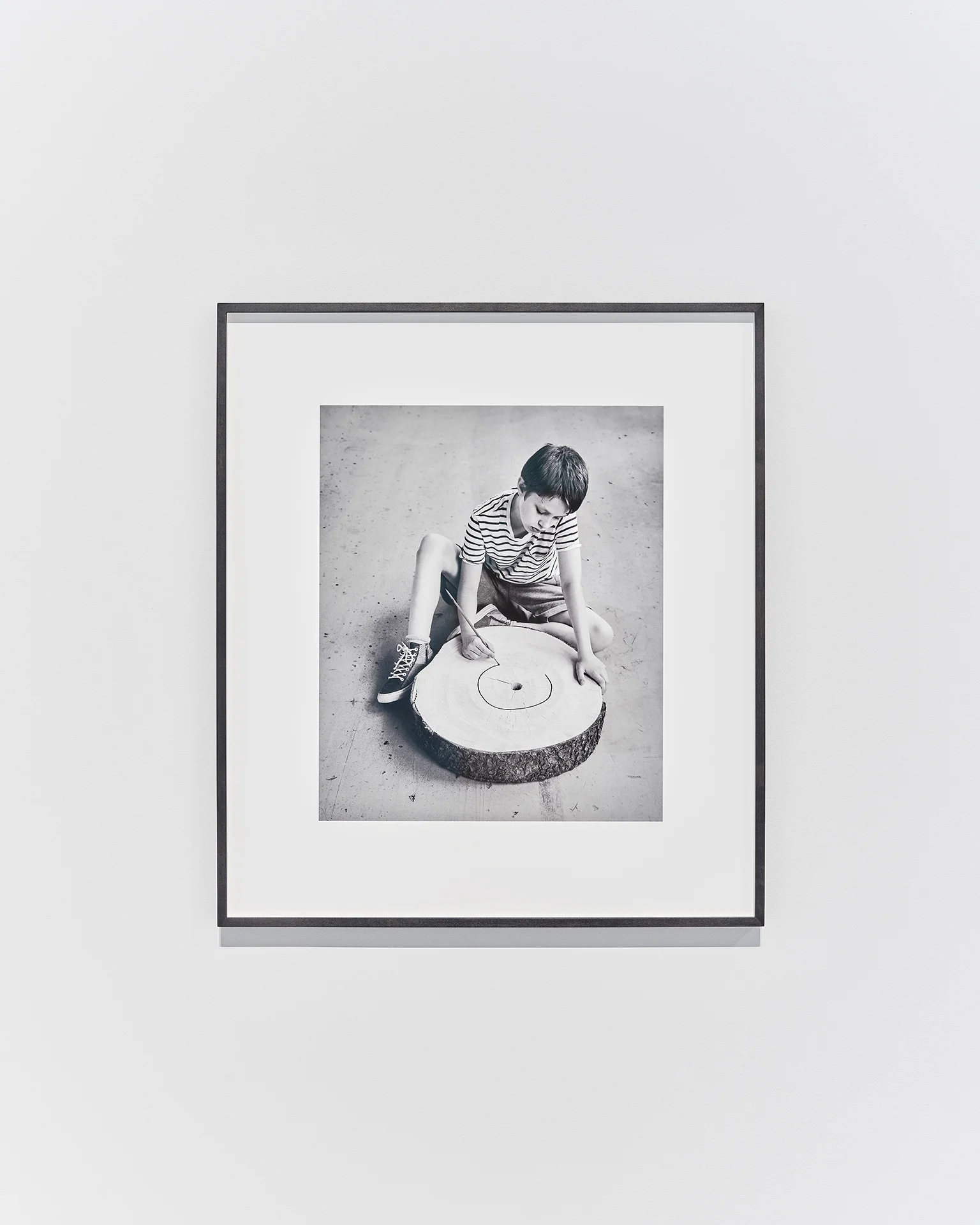
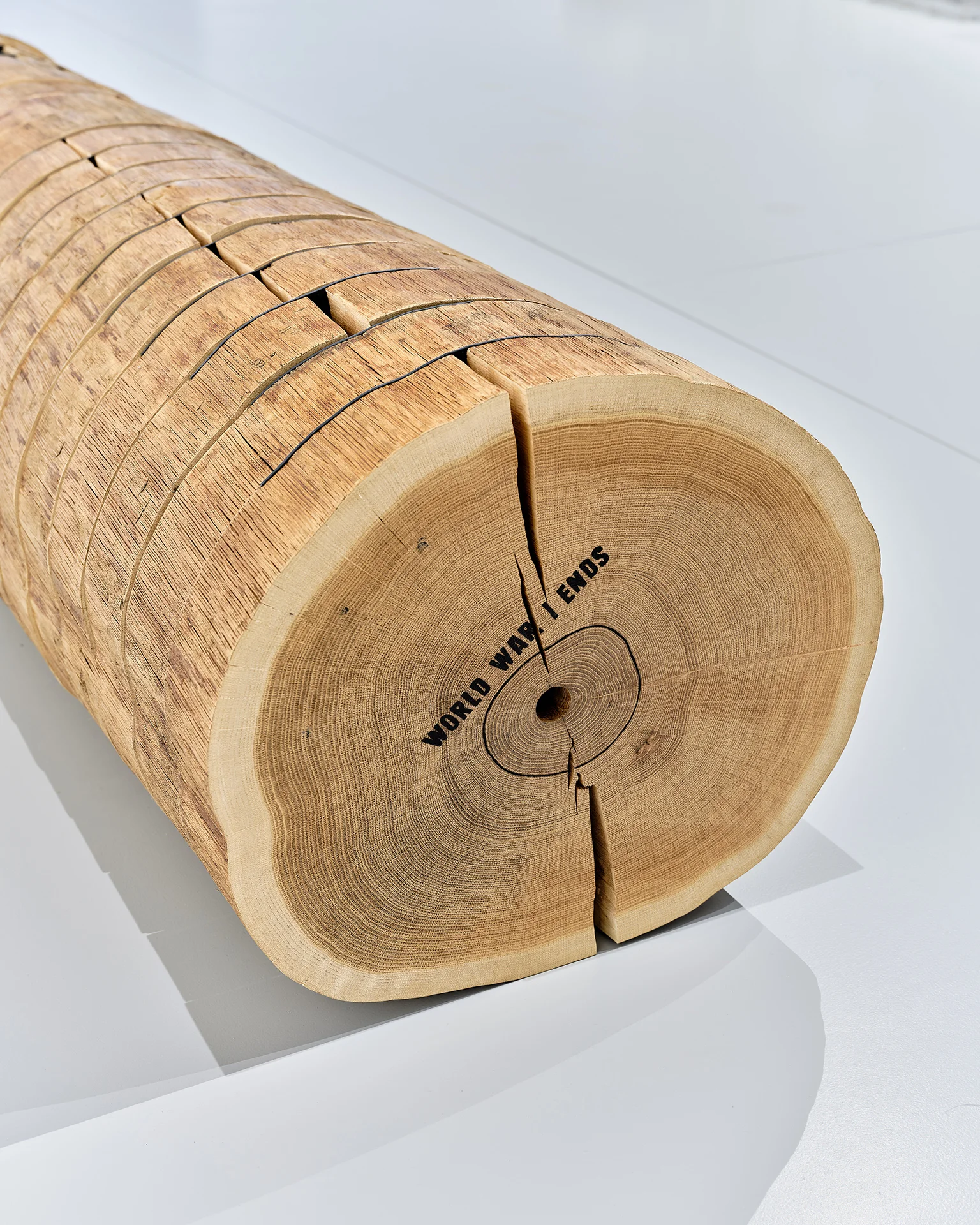
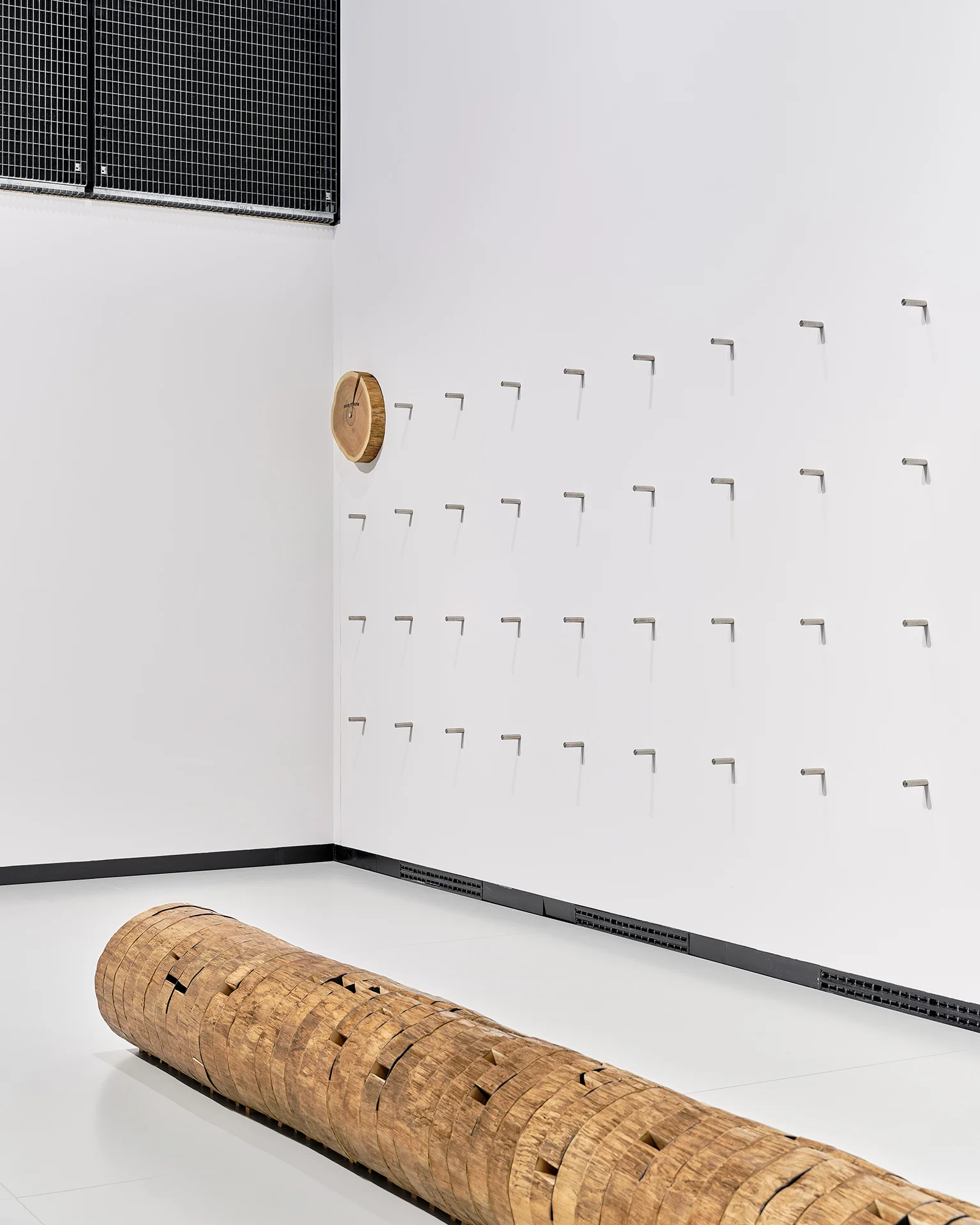
Among the highlights of the exhibition is do not walk outside this area, a monumental readymade created from the wing of a Boeing 737-500. Works such as The Joys of an Iron Curtain Trip to the Black Sea and Bad News Is a Thing of the Past Now reflect on Central Europe’s communist past, interweaving personal biography with collective memory. In Gallery 2, visitors encounter the participatory performance Measuring the Universe, which unfolds through the audience marking their heights on walls. The striking Event Horizon is a daily-growing installation made of tree discs marked with world events spanning a century.
Ondak has an uncanny ability to ascribe deep, cosmological meaning to ordinary objects and happenings. Such a propensity would fast become overbearing, tiresome even, if not for his lightness and wit. There is something fundamentally fun about plonking the wing of a Boeing 747 in the middle of an art gallery and inviting people to bound across it. This is a piece of machinery that belongs thousands of feet in the air; something that has carried hundreds of people across space disproportionate to the time taken to do so. Watching people tread cautiously on it at first and then break out into catwalks and selfies is a joy. There is a mischief to it.
When showing us round the space, Ondak muses:
“The idea of the standing on the wing is designed to give you a peculiar experience because on one hand you are given freedom of choice and it is very safe but in another way it is unsettling, forbidden.”
Roman plays with the viewer’s preconceptions of what art is. His is a playfulness that shines a light on the absurdity of it all, particularly in the face of the societal forms we have spent thousands of years establishing. Not once does he claim it to be anything other than chaos and perspective. Naturally, this makes for irresistibly evocative art. We are invited not just to participate, but to complete the work with our own input and takeaways. That said, the art isn’t at all instructive. It doesn’t tell us how to look or interpret them – only that we must shape the universe ourselves and applied perspectives are all that matters when trying to define reality.
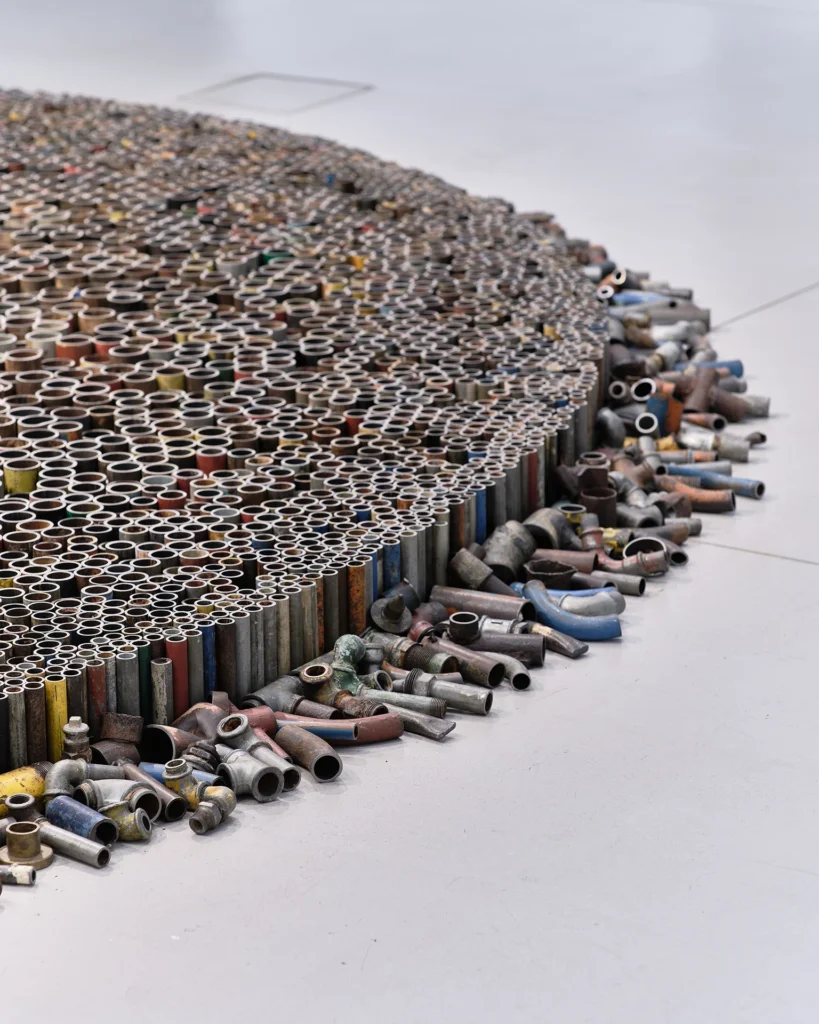
In Perfect Society, Ondak has taken the internal pipes of his old local train station and cut them into 15,000 pieces. In a single breath he refers to the cut metal as tree branches, bees and internal veins. And he’s right. They are all of these things just as surely as they are old pipes in a circle – arranged as such to reflect the cyclical nature of the universe. The thickest are at the centre, with the thinnest on the outskirts.
“It is a reflection of society,” Roman says.
“The strong ones are in the centre but it could not work without the marginal pipes on the outside. Without these parts, we cannot function. And the shape and the structure is not an optical illusion but it should remind one of a beehive. What is fascinating about bees is that the hardest bees look after the weakest. It can work in a human community too but we undermine by saying every man for themselves.”
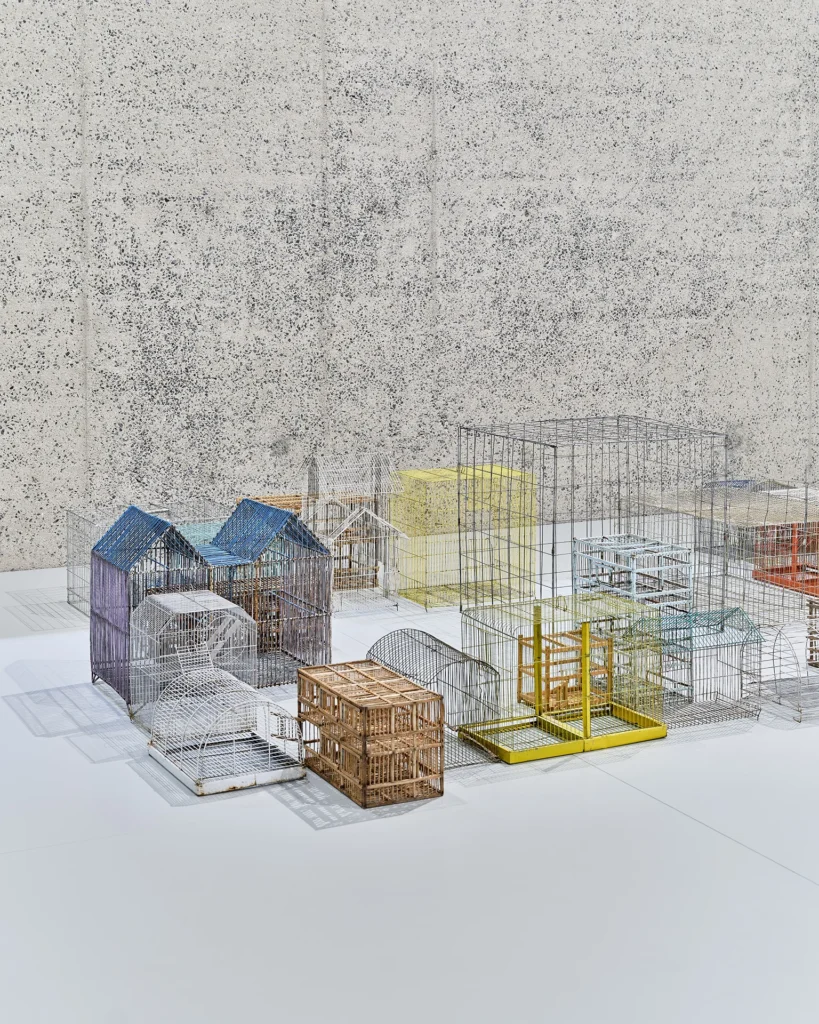
Escape Circuit shows us a dioramic neighbourhood of cages, some big, others small. Each one has a view to the outside world and the larger structures (that are still cages) beyond. The idea being that there is always a bigger cage.
“They provide safety and inspire aspiration,” Roman says. “But they of course represent the deprivation of freedom.”
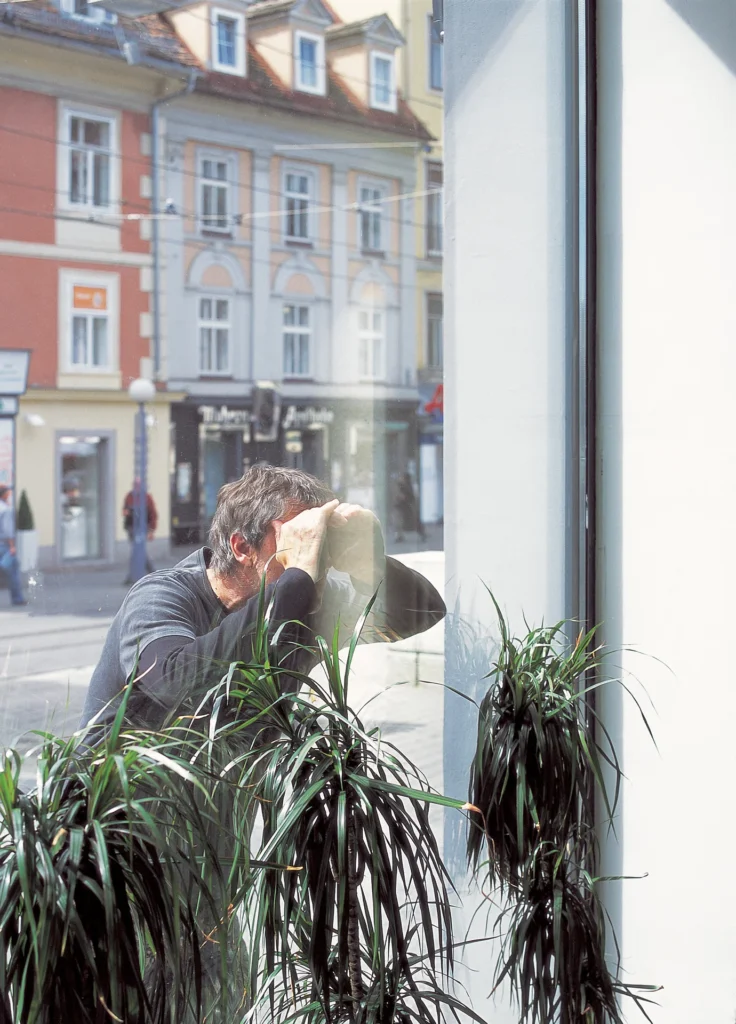
Video works like The Stray Man highlight Ondak’s interest in the subtle choreography of everyday life. The films he presents play out like hidden camera comedy sketches. We see a man empty an enormous box of coins into a fountain; three people ambling around with their shoelaces untied; a strange figure in a perpetual state of preparing to enter an art gallery. Existential themes are Trojan horsed into our psyche by way of these surreally comical vignettes.
Whether Roman draws a blueprint first or improvises is something he doesn’t want to divulge, which speaks to that ultimate conundrum as to whether this universe chance or design. Why not both? I suppose it’s just a matter of perspective.
Roman Ondak: The Day After Yesterday runs from 13 November 2025 to 9 March 2026. The exhibition is accompanied by a rich programme of talks, screenings, workshops, as well as lectures and special events in the TransformArt series, which focuses on contemporary art and its intersections with other fields.