Few artists have changed the course of modern art as profoundly as Jasper Johns. He is one of the most celebrated artists of 20th century, whilst also being among its most elusive.
The Guggenheim Bilbao’s Jasper Johns: Night Driver, bringing together 134 works spanning more than seventy years, reveals an artist who, in deconstructing the individualism of the Abstract Expressionist movement, unearthed something universally personal. Sometimes, when we are able to shift our focus from the interior and broaden our analytical net onto the shared human experience, secrets of the self are unveiled. Johns has spent more than seven decades ruminating on this. So strongly does he feel about it that, at the age of 24, he destroyed all of his artwork up to that point; rejecting the overtly self-referential ethos du jour.
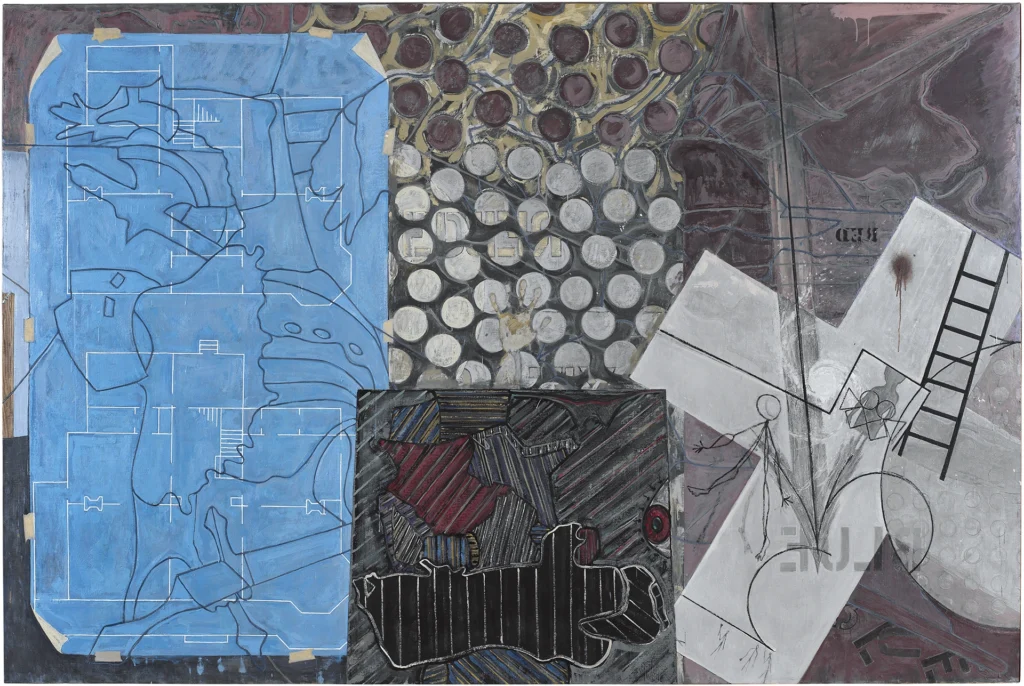
The Eli and Edythe L. Broad Collection
© Jasper Johns, VEGAP, Bilbao, 2026
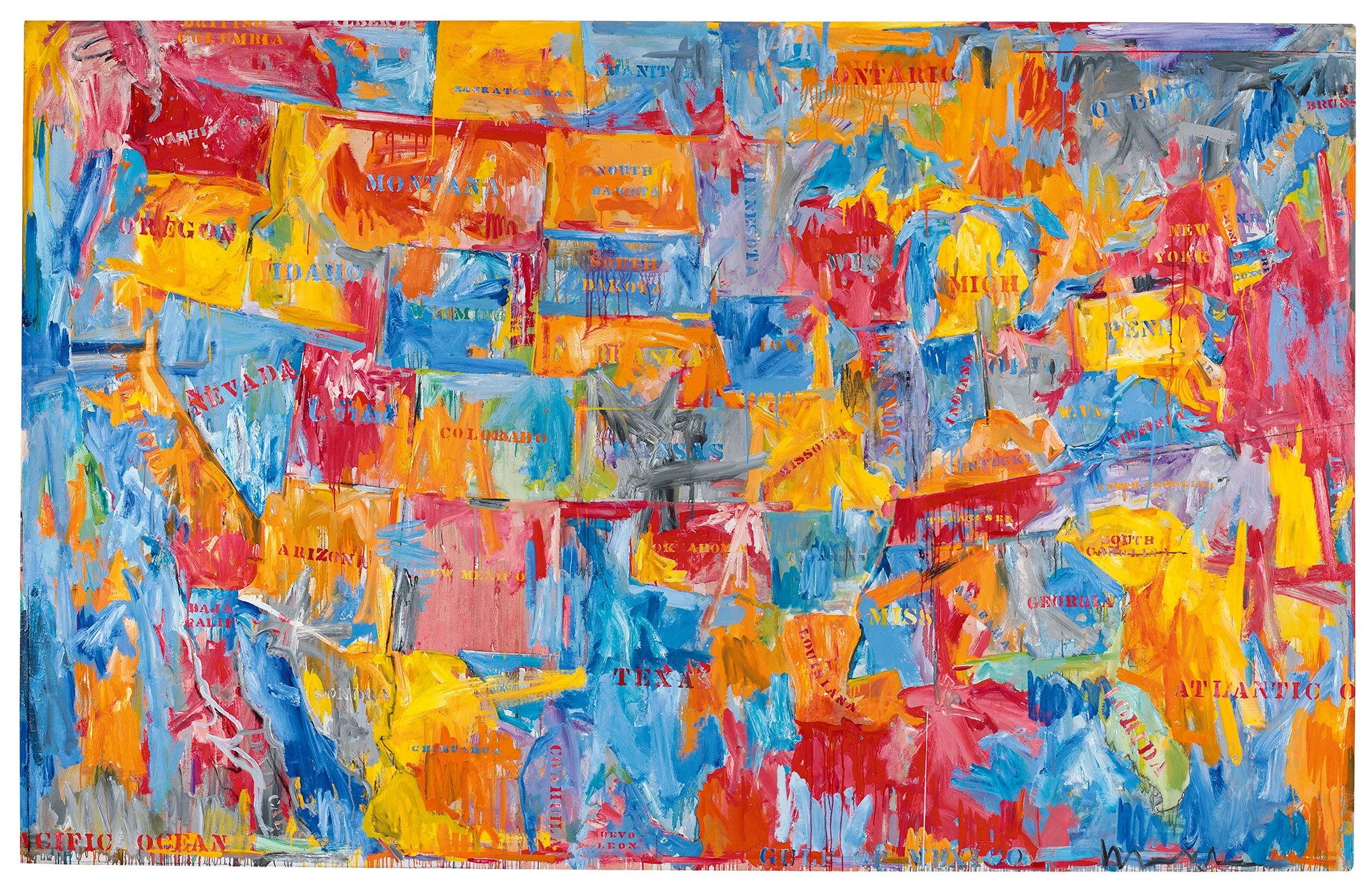
Johns emerged in the 1950s, when Abstract Expressionism dominated American art. While the likes of Jackson Pollock and Willem de Kooning elevated autobiographical emotion, Johns looked outward. Soon after scrapping his entire portfolio, he painted his first American flag. It marked the beginning of a body of work built around familiar motifs – flags, targets, maps, letters and numbers – that would help lay the foundations for Pop Art, Minimalism and Conceptual Art.
Yet Johns’ rejection of Abstract Expressionism was not a rejection of biography, although this may have been his initial goal. His art suggests that identity itself is composite; that we are assembled from memories and relationships. Even when tracing another artist, as he did with Cézanne, de Kooning and Picasso, the resulting image remains unmistakably Johns.
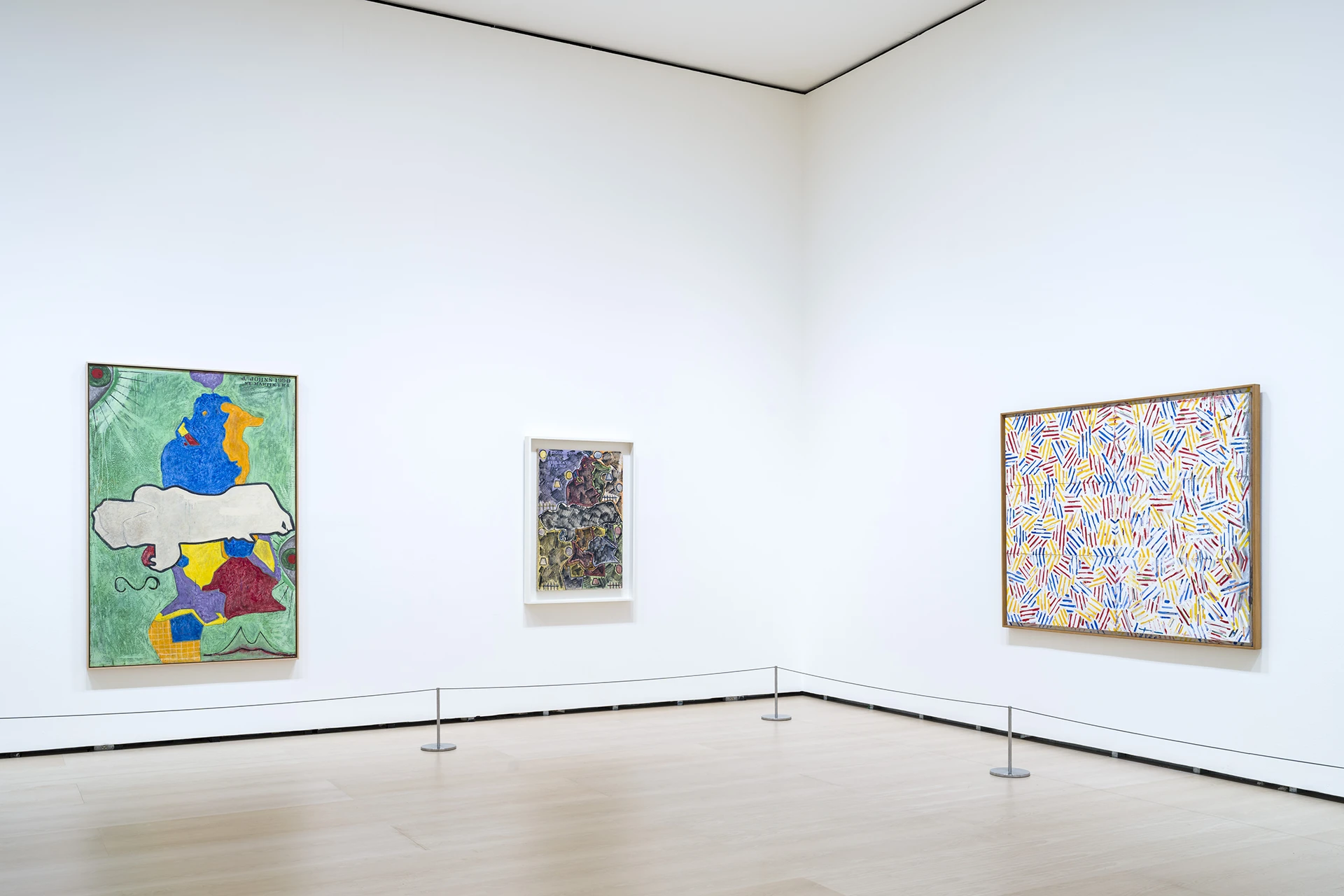
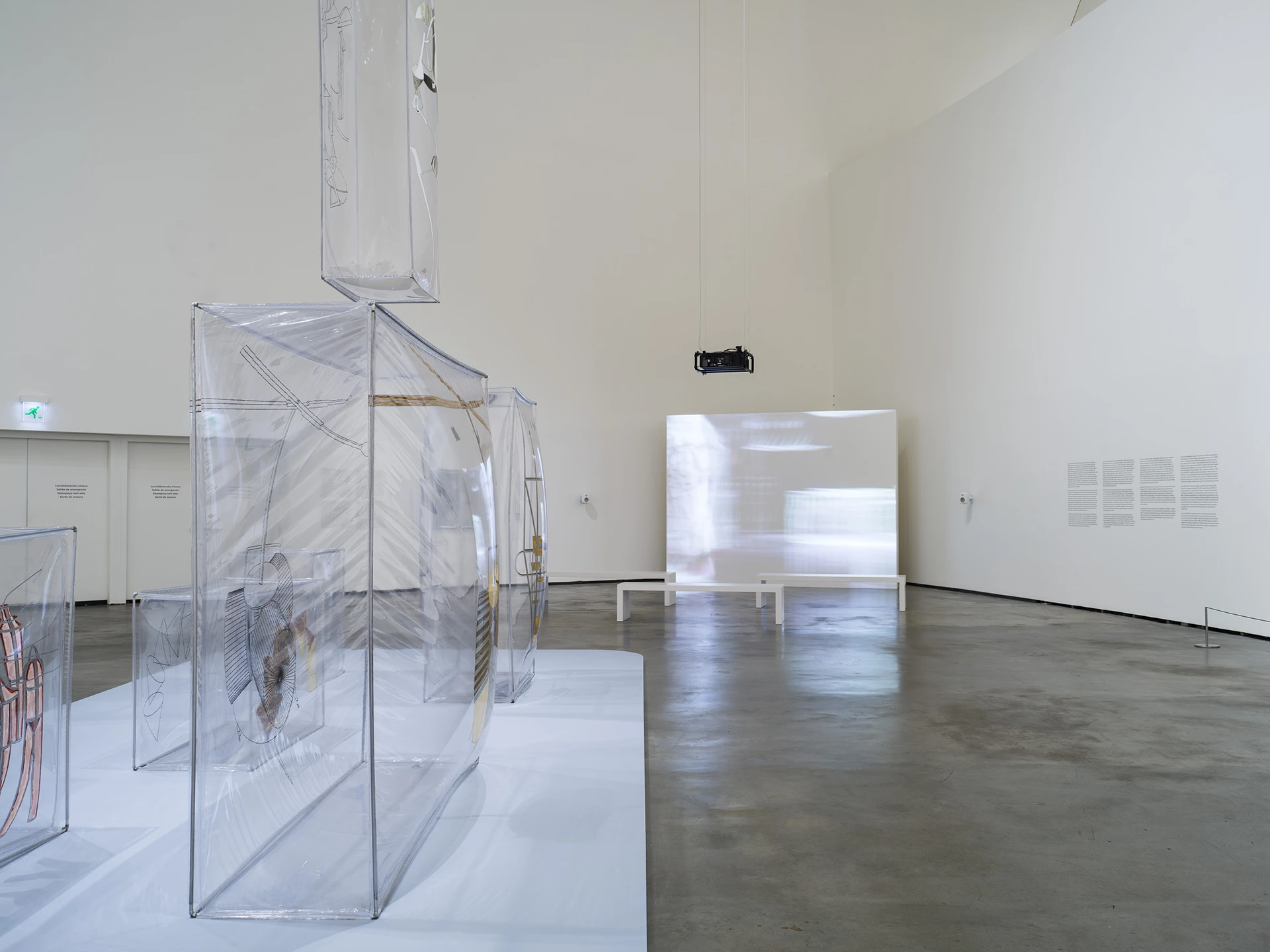
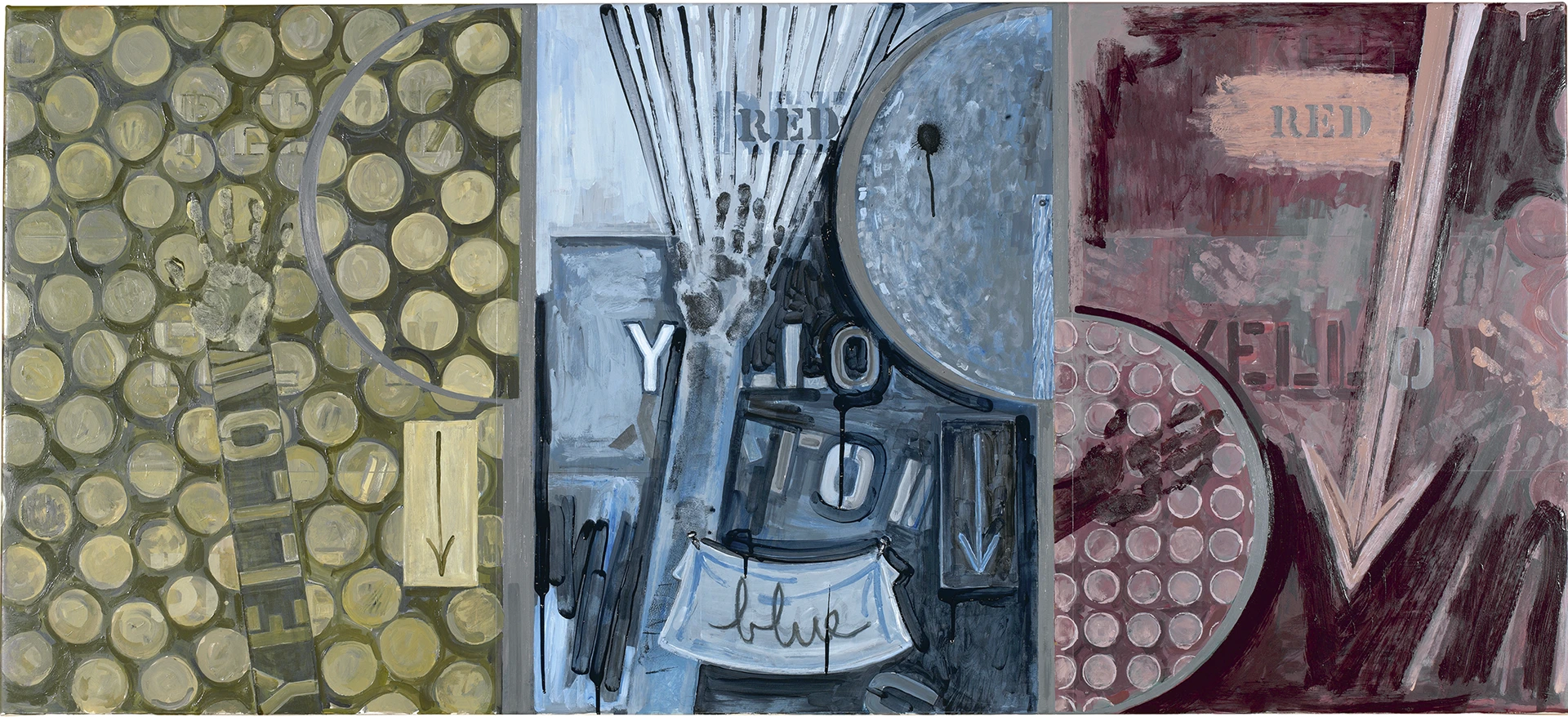
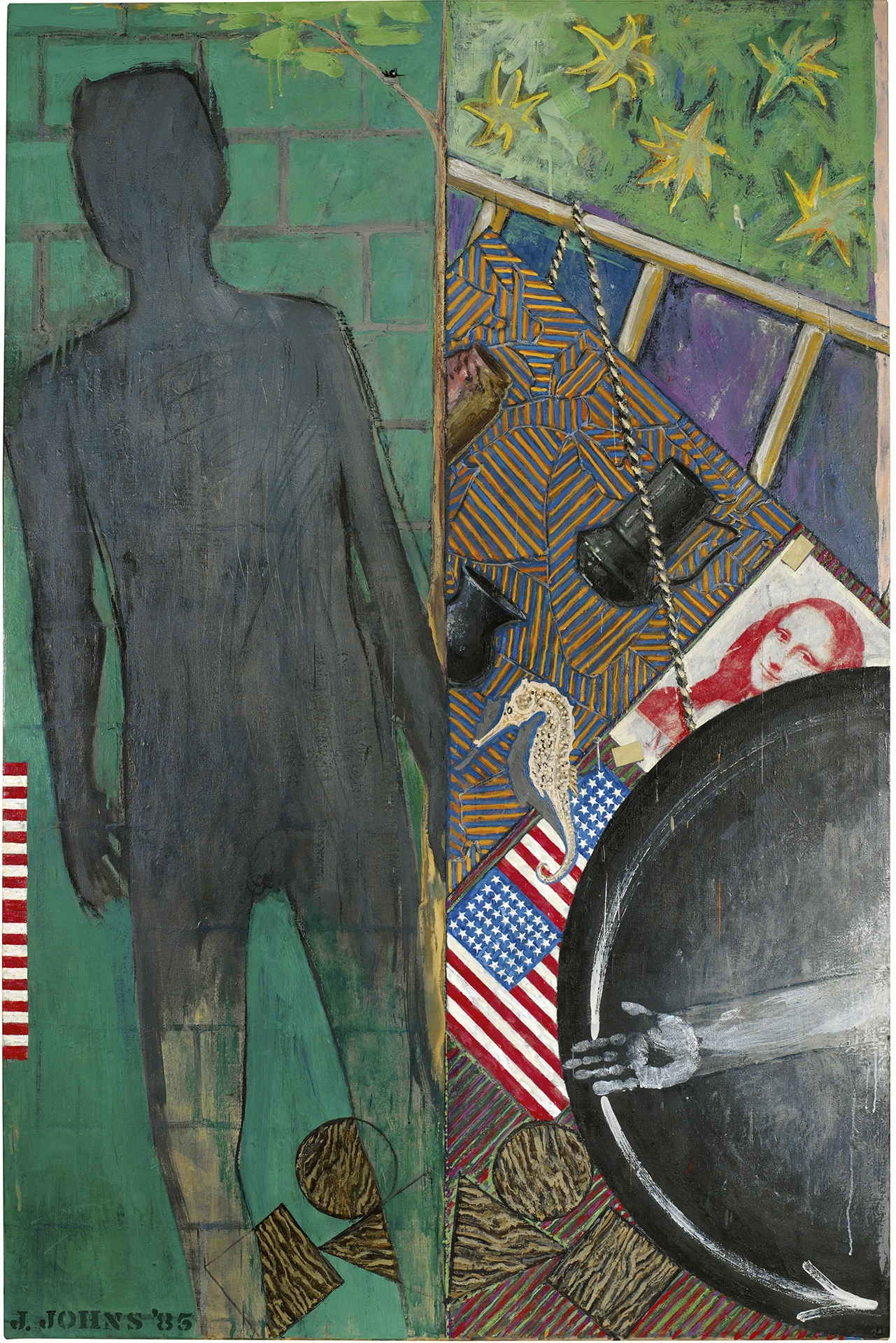
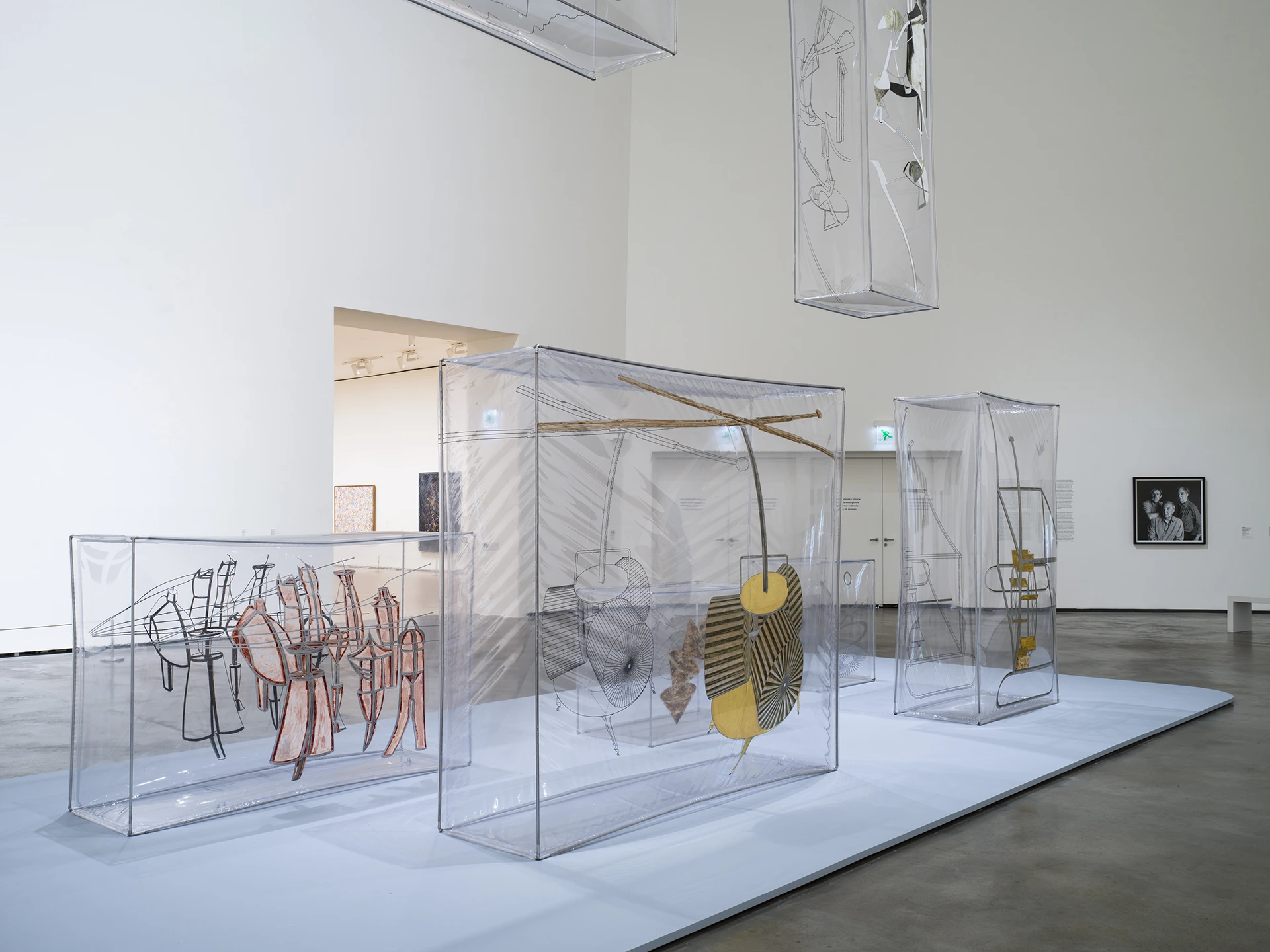
The exhibition reveals an artist in perpetual dialogue with others. Friends and collaborators including Robert Rauschenberg, John Cage and Merce Cunningham appear throughout his career. Their interdisciplinary approach transformed the artistic landscape of post-war America. Johns designed sets and props for Cunningham’s productions, embracing the notion that disparate elements (like movement and music and image) could coexist without directly connecting to one another. Dancers move arrhythmically to a piece of music, as if they are hearing a different song.
Marcel Duchamp, meanwhile, remains a ghostly presence throughout the work. His influence is seldom obvious, but it is constant. A portrait of Duchamp hidden within a dark abstract canvas, where only a nose emerges from the surface, speaks to Johns’ fascination with concealment. His paintings are full of the hidden and the half-seen. This tension between revelation and obscurity runs throughout his practice. Johns famously gave little away in interviews, sometimes responding with only a few words. Art, he once remarked, is something one cannot repress; it is necessary. But explanation was another matter.
Gift, Ludwig Collection, 1976
© Jasper Johns, VEGAP, Bilbao, 2026
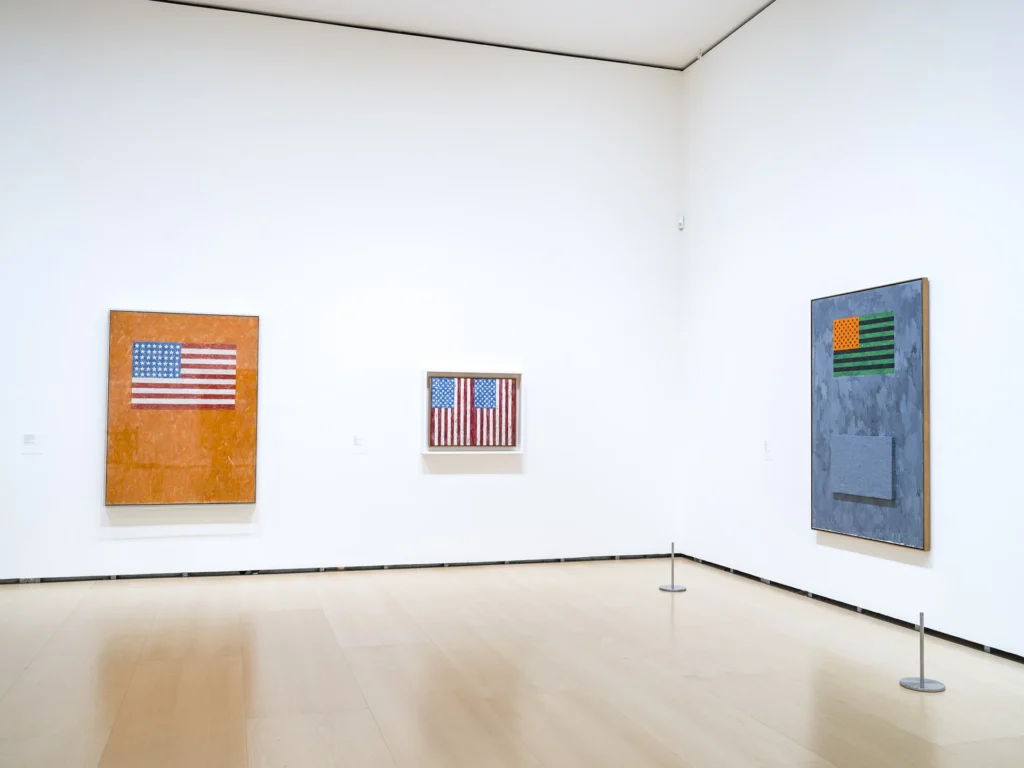
His paintings similarly resist definitive interpretation. The famous flags are not patriotic statement so much as ruminations on representation itself. We think we recognise an American flag, but are we actually seeing one? In one work, altered colours create an optical illusion, producing the “correct” colours only in the viewer’s eye. Meaning, Johns suggests, is never fixed.
As weighty as these concepts are, Johns is never far away from puncturing it all with his superbly irreverent sense humour. Painting with Two Balls (1960) quite literally pierces the macho seriousness of Abstract Expressionism with two tiny wooden spheres inserted into the slit of the canvas. In Ale Cans (1960) two Ballantine ale cans sit side by side, looking indistinguishable from actual cans. One was cast in bronze and painstakingly painted. The work began as a joke with Willem de Kooning, who had remarked that the famed art dealer Leo Castelli could sell anything, even beer cans. Johns took him at his word.
As he matured, Johns’ work came to be filled with more deliberate (if still restrained) emotion buried amongst his symbols. A painting dedicated to his friend Frank O’Hara originally contained a skull and the words “dead man”, hidden beneath layers of grey paint and only discovered decades later by X-ray analysis. What appears faint on the surface conceals profound feeling beneath. In rejecting the heroic individualism of Abstract Expressionism, Johns was not rejecting biography. Instead, he proposed that identity itself is composite of influences. Spectral cameos of friends and lovers appear throughout his work and, through them, Johns reveals himself.
Bronze, tempered glass, and silver plating . Edition of 2 (2/2)
Collection of the artist
© Jasper Johns, VEGAP, Bilbao, 2026
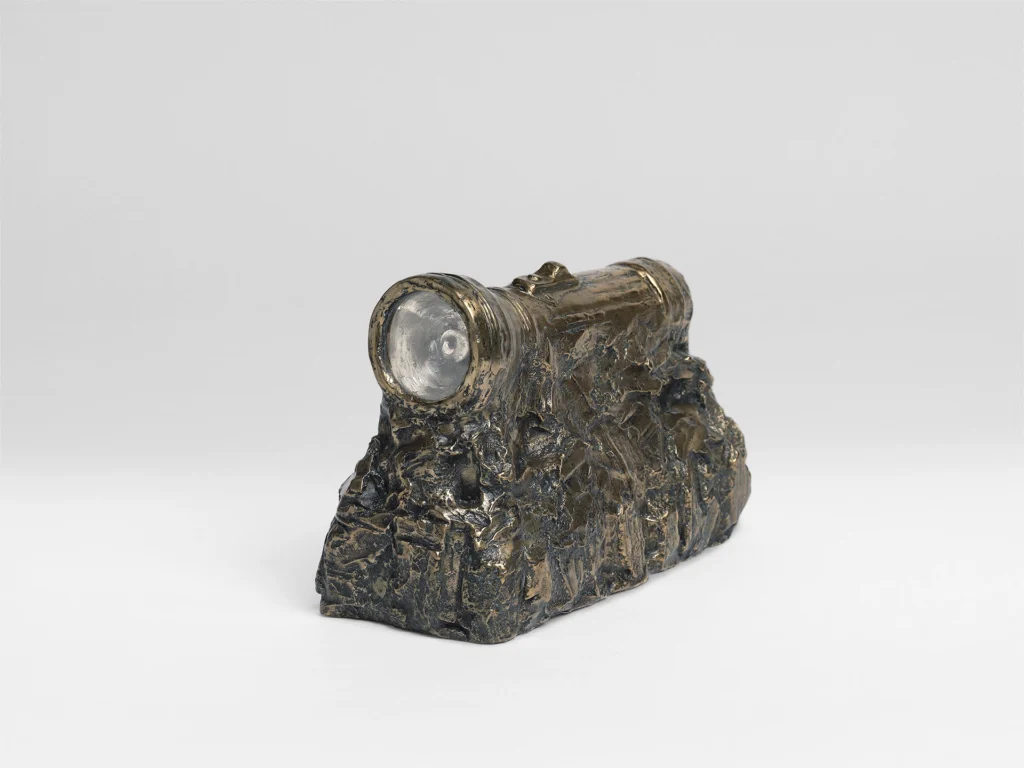
In one work, he places a mirror facing the past and a torch pointing towards the future. The image serves as an apt reflection of his artistic practice. His work embrace pastiche without embarrassment, drawing equally from Duchamp, Beckett, Tennyson, Munch and Picasso. Even his collaboration with Samuel Beckett revelled in disconnection, with image and text refusing to explain one another.
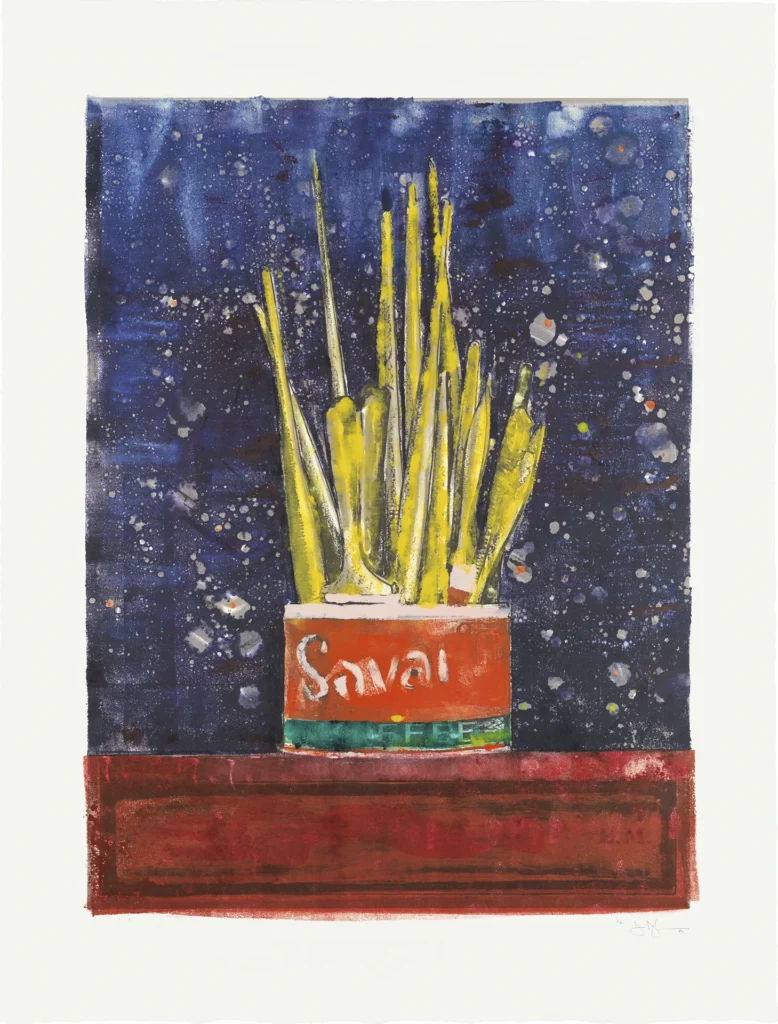
The later decades saw Johns continue to broaden his gaze, whilst leaving chunkier breadcrumbs to his elusive sense of self. The crosshatch paintings of the 1970s and 1980s explore repetition and variation with an almost musical verve, while subsequent works introduce floor plans of his grandparents’ house, references to galaxies, mysterious objects, baths and toothbrushes. The mundane and the sublime coexist; life and death, humour and criticism, anatomy and the cosmos. Perhaps this paradoxical layering of the self and the universal is why Johns, at the age of 96, remains so compelling.
Whitney Museum of American Art, New York
Gift of The American Contemporary Art Foundation, Inc., Leonard A. Lauder, President © Jasper Johns, VEGAP, Bilbao, 2026
Johns has always proved a frustrating subject for interviewers. Rarely willing to discuss meaning, he preferred ambiguity to explanation and often responded to questions with silence, deflection or the briefest of answers.
On one occasion, when presented with a painstakingly verbose interpretation of his work, he simply replied, “If you say so, yes.”
More than seventy years after painting his first flag, Jasper Johns still reminds us that looking is never passive. Every image contains mysteries. Every act of seeing is also an act of interpretation. And perhaps, in the end, art tells us less about the object it inhabits than about ourselves.