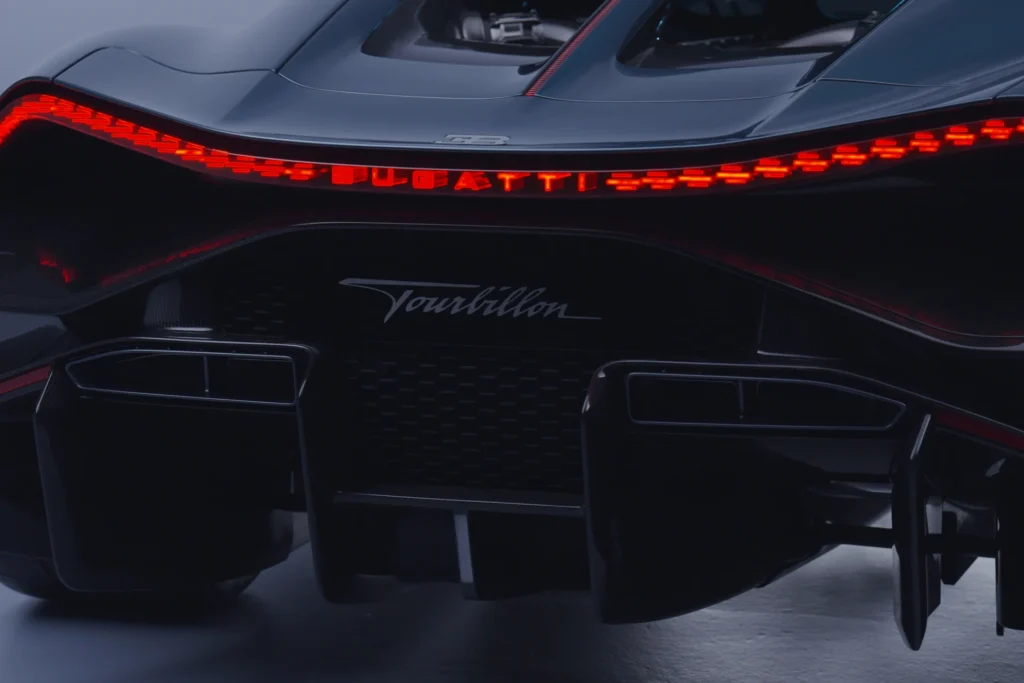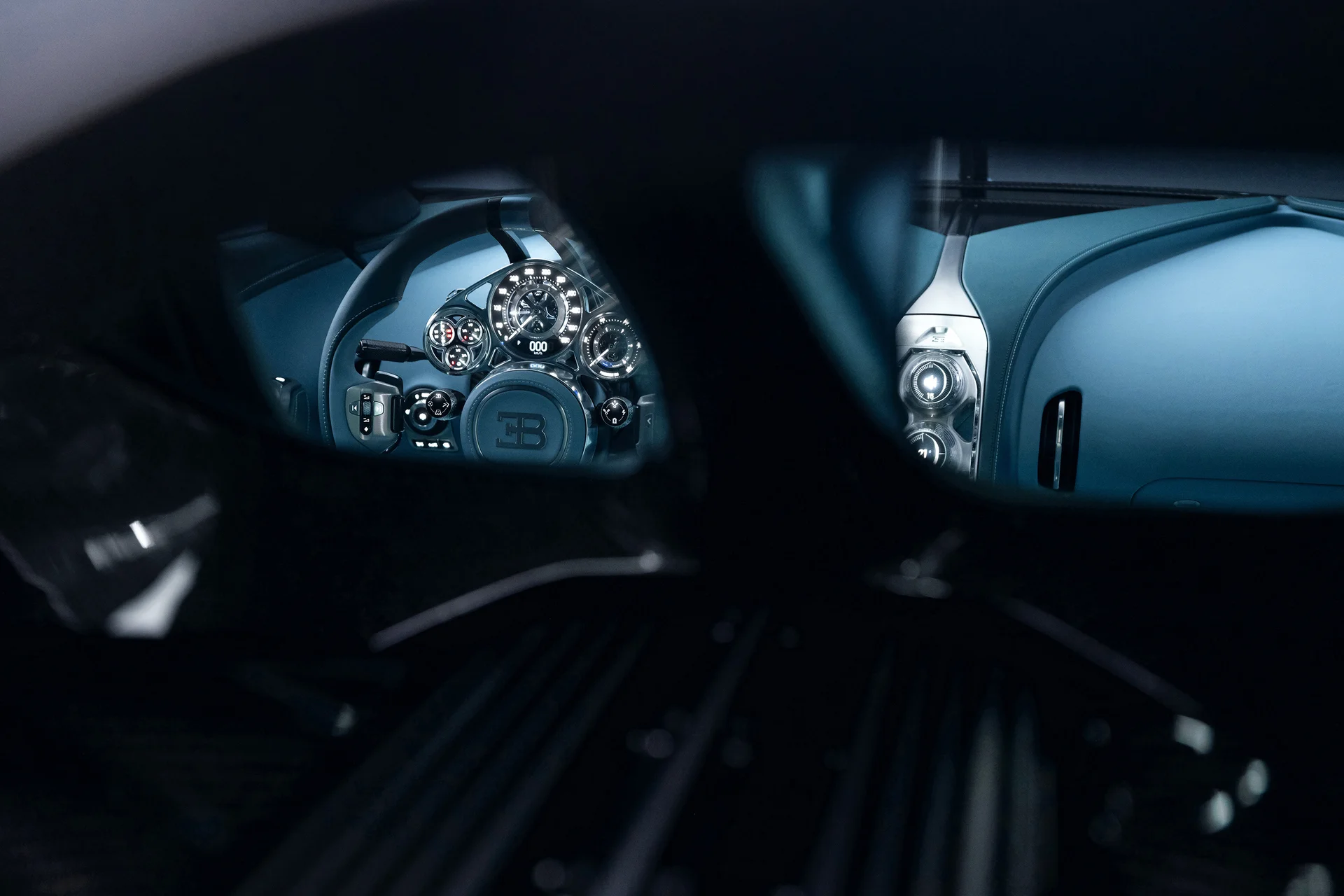
There was a time when the heart of a machine was measured in microns rather than megapixels.
Quality was tangible and painstakingly crafted, with blood and sweat correlating to a physical manifestation of the designer’s vision. These days, it’s all programmed in. The artistry of the analogue is falling by the wayside; curved glass and configurable screens are all the rage. The Bugatti Tourbillon breaks the mould with its watch-intricate design and analogue aesthetics.
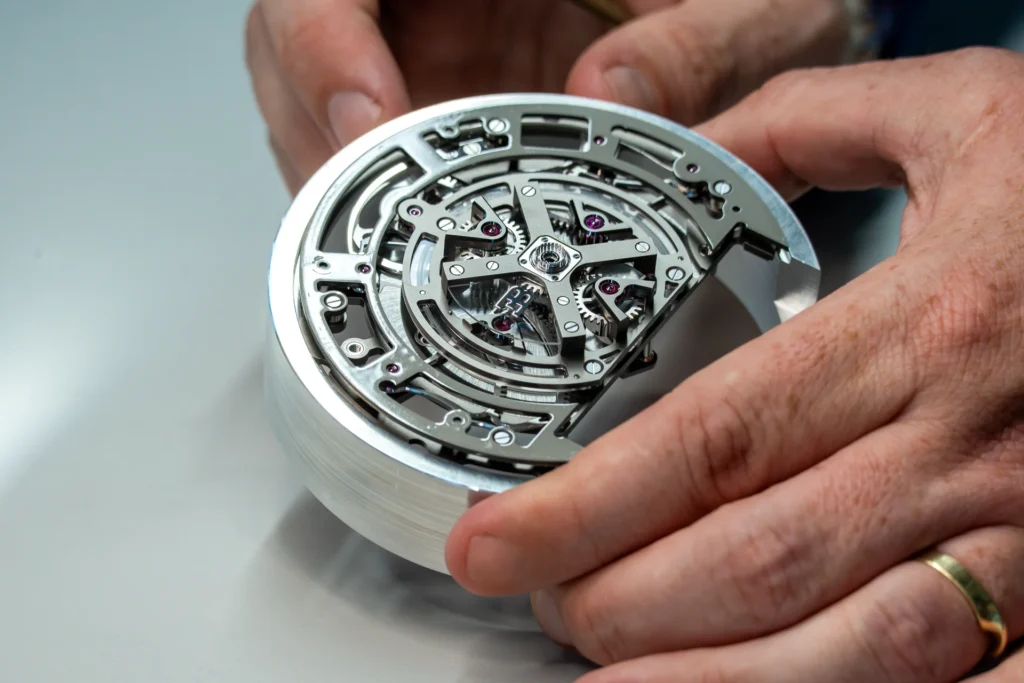
A Bugatti is normally named after fabled drivers of yore – Pierre Veyron, Louis Chiron, Albert Divo – but this iteration takes its name from the mechanism of a watch. First patented in 1801 by Abraham-Louis Breguet, the tourbillon mechanism was devised to counteract the effects of gravity on a watch’s escapement, ensuring greater accuracy. Bugatti’s decision to christen it new hypercar after this invention signalled that this would be a machine rooted in mechanical permanence. That philosophy demanded a dashboard immune to fashion cycles and software redundancy. The solution arrived through a partnership with Concepto, a Swiss manufacture specialising in high complications and what they have created is, quite literally, a masterpiece within a masterpiece.
“Each component of both the engine and the cluster, is made by the best people possible so that the highest end result is achieved,”
Alexandra Tavares, interior designer at Bugatti
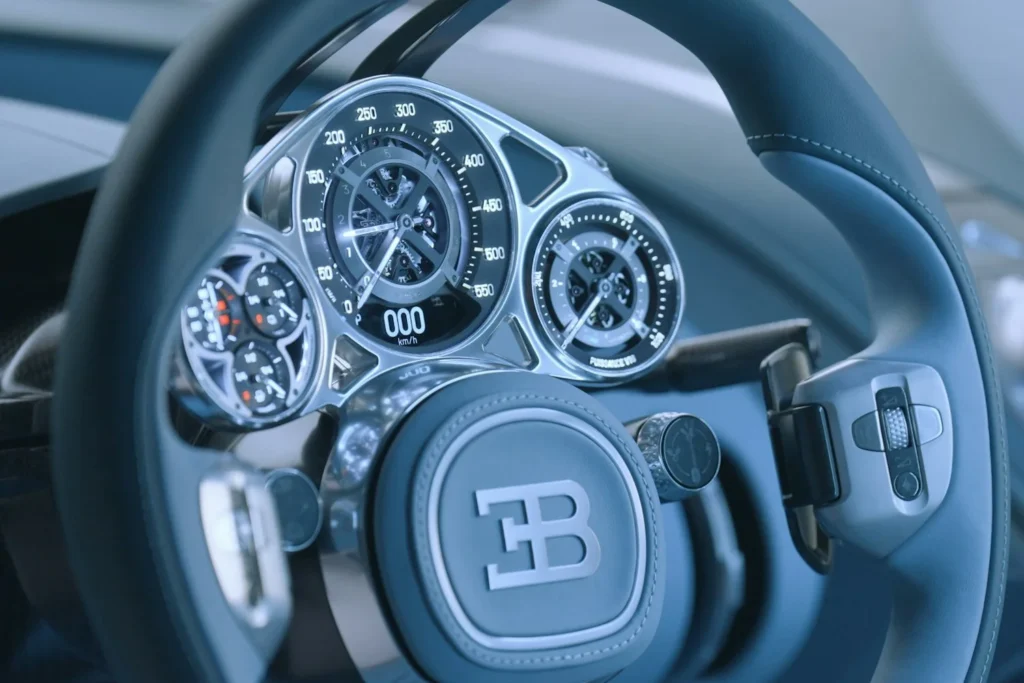
At the centre of this latest chapter for Bugatti sits an instrument cluster unlike anything the automotive world has seen before: a fully analogue, hand-assembled mechanical creation conceived in the rarefied air of Swiss haute horlogerie. The instrument cluster comprises more than 650 individual components, each crafted and finished using traditional watchmaking techniques. These are techniques usually reserved for objects measured in millimetres and worn on the wrist. Here, they are scaled dramatically upward, suspended at the heart of a 1,800-horsepower hypercar.
Watchmakers accustomed to microscopic dimensions suddenly found themselves operating on an architectural scale. Conventional tools proved inadequate; new machinery had to be developed, and processes reimagined. Yet the finishing standards remained uncompromising. Clous de Paris. Radial guilloché. Engine-turned patterns that subtly echo Bugatti’s historical design language. Shimmering aventurine surfaces. All textures are cut, engraved and polished by hand.

The rubies embedded within the cluster serve as functional bearing jewels, chosen for their ability to reduce friction within mechanical movements. Sapphire crystal protects the display. Skeletonised bridges reveal the architecture beneath. Even the gears themselves have been designed exclusively by Concepto for the Tourbillon.
For all its devotion to 19th-century principles, the cluster coexists seamlessly with 21st-century performance. The Tourbillon is a hypercar of extraordinary capability, and its instruments must keep pace. LEDs and printed circuit boards are integrated into the mechanical assembly. Lightweight materials, necessary for performance, introduced new constraints on colour and finish. Every aesthetic decision was balanced against physics.
“Bugatti is a prestigious automobile brand and the watchmaking that Concepto offers to its clients is prestigious watchmaking. So in my opinion, the marriage between this car brand and the movements that Concepto offers is something that fits perfectly,” says Valérian Jaquet, CEO and founder of Concepto.
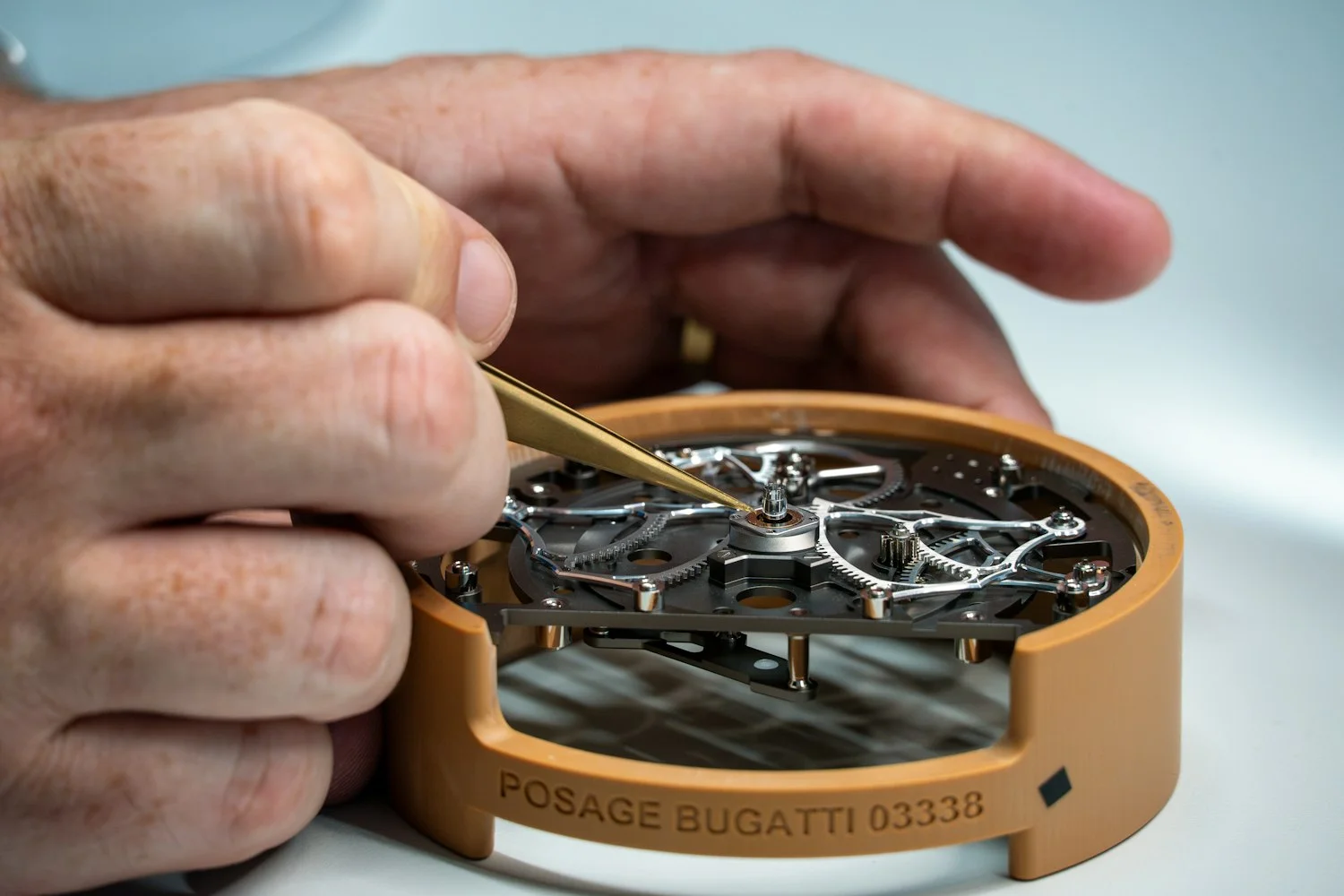




Bugatti wanted the Tourbillon to be “honest” and their design decisions make visible the inner workings of the cluster. Perhaps the most striking flourish is the fixed-hub steering wheel. The rim rotates around a central hub that remains static, ensuring the instrument cluster is always on show. Personalisation elevates the cluster further with over 650 components and clients can customise their configuration much as they would a bespoke timepiece.
It’s really quite something to see the minutely delicate process of watchmaking applied to this roaring, muscular menace of a motorcar. Something akin to teaching a dragon ballet – it seems absurd at first but the result, if pulled off, is transcendent. And Bugatti pulls it off with abject aplomb. The inner workings of the car’s engine and analogue cluster are so brilliantly designed that they are matched only by each other.
Bugatti set out to do something exceptional, swearing by the tenet: “if it’s comparable, it’s no longer Bugatti.” Well the Tourbillon is a timeless feat of engineering, performance and good, old fashioned style.